

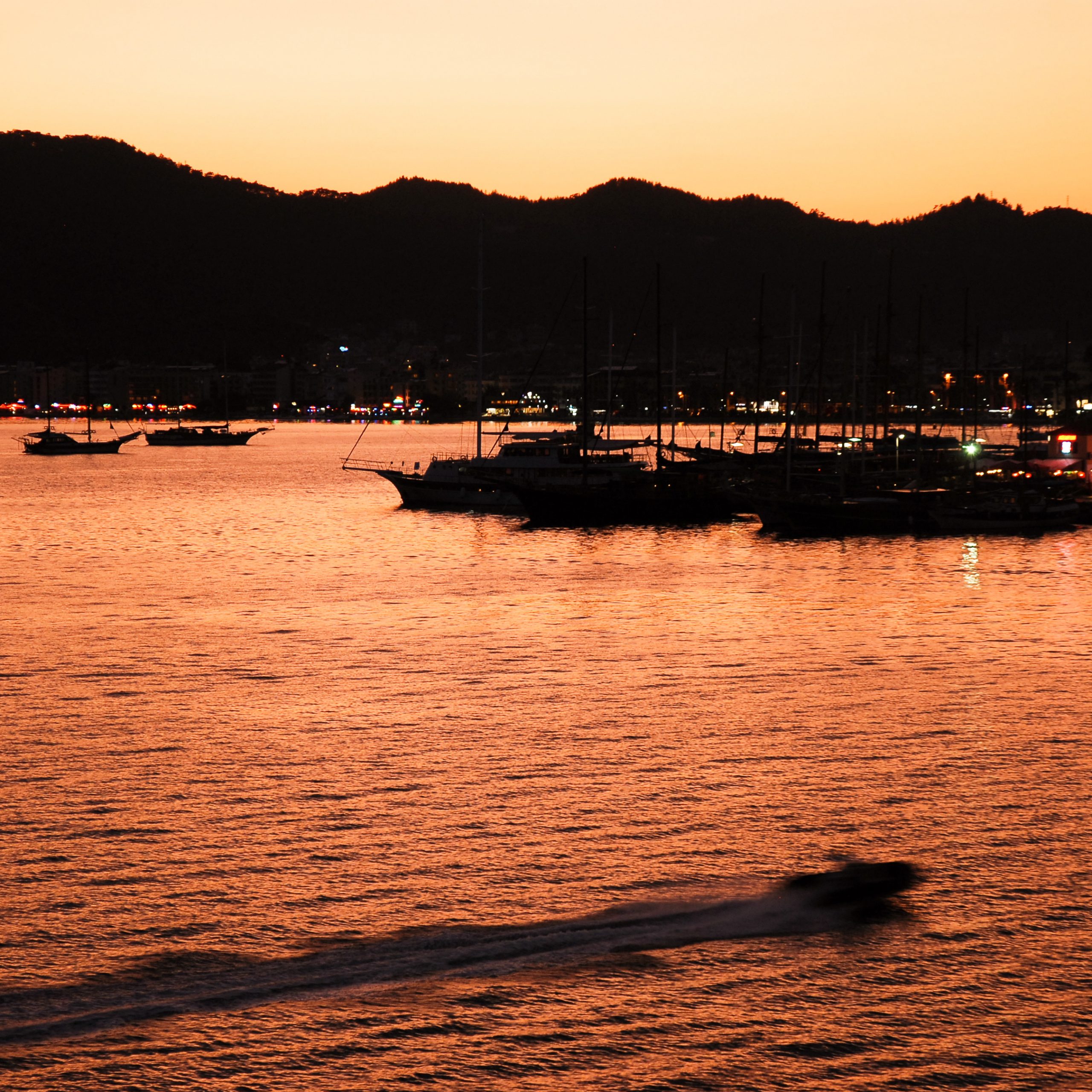

MARMARIS, TÜRKIYE — There is a particular blue you only ever see along Turkey’s south-west coast. Not Aegean blue, not quite Mediterranean blue: somewhere between turquoise and ink, deeper in the bays, paler over the sandbanks, and impossible to photograph faithfully. Sailors call it the Turquoise Coast, and the easiest way to fall under its spell is to step aboard a gulet in Marmaris harbour and simply head east.
This is our guide to the Blue Voyage — the slow, century-old tradition of cruising this coastline by wooden boat — and to Marmaris, the lively port town where most voyages begin.
What is a Blue Voyage?
The phrase Mavi Yolculuk was coined in the 1940s by the Turkish writer Cevat Şakir Kabaağaçlı, who escaped Istanbul on a gulet and never quite came back the same. A Blue Voyage today is exactly what he discovered: days at anchor in pine-fringed coves, swimming straight off the deck, lazy lunches under a canvas awning, evenings of grilled fish and rakı as the lights of small fishing villages flicker on across the bay.
The boat itself, the gulet, is part of the magic. Hand-built in the boatyards of Bodrum and Marmaris from local pine, gulets are wide-beamed, two-masted, and built for relaxed sailing: open decks for sunbathing, shaded lounges for the heat of the afternoon, four to eight cabins below. Crews are small (a captain, a deckhand, a cook), service is informal, and the rhythm is set by the weather and your appetite.
Marmaris: the gateway
Marmaris itself is a town of two halves. Its old castle quarter, with whitewashed lanes climbing above the harbour, is the most atmospheric corner; come here in the early evening for sunset views and a glass of wine on a vine-shaded terrace. The new town, along the long promenade, is where you’ll find the busy bars, restaurants and the great curve of the marina — the largest in the eastern Mediterranean, and a forest of gulet masts in summer.
Spend at least one night in Marmaris before sailing, and one night after. A morning wander through the bazaar, a Turkish bath at one of the historic hamams, and dinner of fresh sea bass at a quayside balıkçı are the right way to bracket a voyage.
The classic itinerary
Most Blue Voyages from Marmaris run for four to seven nights, threading east along a string of bays and coves that are largely inaccessible by road. The classic stops include:
Ekincik & Dalyan River. A short transfer by river boat takes you up the reed-fringed Dalyan, past the rock-cut Lycian tombs of Kaunos and the famous mud baths, all the way to the long, perfectly preserved curve of Iztuzu Beach. Iztuzu is a protected nesting ground for loggerhead turtles, and the rule of the beach is gentle: no umbrellas after dusk, no lights on the sand at night.
Göcek Bays. Twelve protected coves, each more cinematic than the last, sheltered behind pine-forested hills. Drop anchor at Tersane, swim ashore to the ruins of an old Byzantine shipyard, and stay for a long lunch.
Cleopatra Island (Sedir). Legend says Mark Antony brought sand from Egypt for Cleopatra to bathe on; geology says the sand is genuinely unique, found nowhere else along the coast. Either way, the swim from gulet to shore is unforgettable, and the Roman ruins on the island reward an hour ashore.
Phaselite, Kekova & the Sunken City. If your itinerary stretches further east, the half-submerged Lycian city off Kekova — visible from a glass-bottom dinghy — is one of the great archaeological sights of the Mediterranean.
Life on board
Days find their own rhythm. Coffee at sunrise on deck. A morning sail with a light breeze on the beam. Anchor down by mid-morning in a cove no road can reach. A long swim before lunch, served at the long table on deck — fresh tomatoes, grilled sea bream, börek, ripe figs. The boat moves on after siesta. Evenings end at anchor, the deck lit by a string of lanterns, dinner under the stars.
Bring soft luggage (cabins are compact), reef-friendly sunscreen, a hat, sandals you don’t mind getting wet, and a single dressier outfit for an evening ashore. Leave the laptop at home.
When to sail
The Turquoise Coast season runs May to October. May and June are warm, green and uncrowded. July and August are high summer — busier, with the meltemi wind whipping up in the afternoons and a more festive atmosphere in the bays. September is, in our view, the perfect month: warm sea, soft light, fewer boats, and the first cool evenings creeping back in.
Private charter or cabin charter?
Two ways to do it. Private charter books the whole gulet for your group — perfect for families, couples travelling together, or a multi-generational trip; the itinerary is yours to shape with the captain. Cabin charter books a single cabin on a fixed-route gulet, sharing with other guests. Cabin charter is friendlier, less expensive and very social; private charter is, of course, the way to do it properly.
How Lupin sails the Turquoise Coast
Our Marmaris Blue Voyage is a four-day, three-night private charter aboard a hand-picked traditional gulet, with a captain who knows the quietest coves and a chef who shops at the local market each morning. Tell us when you want to sail, and we’ll do the rest.
0 Comment