

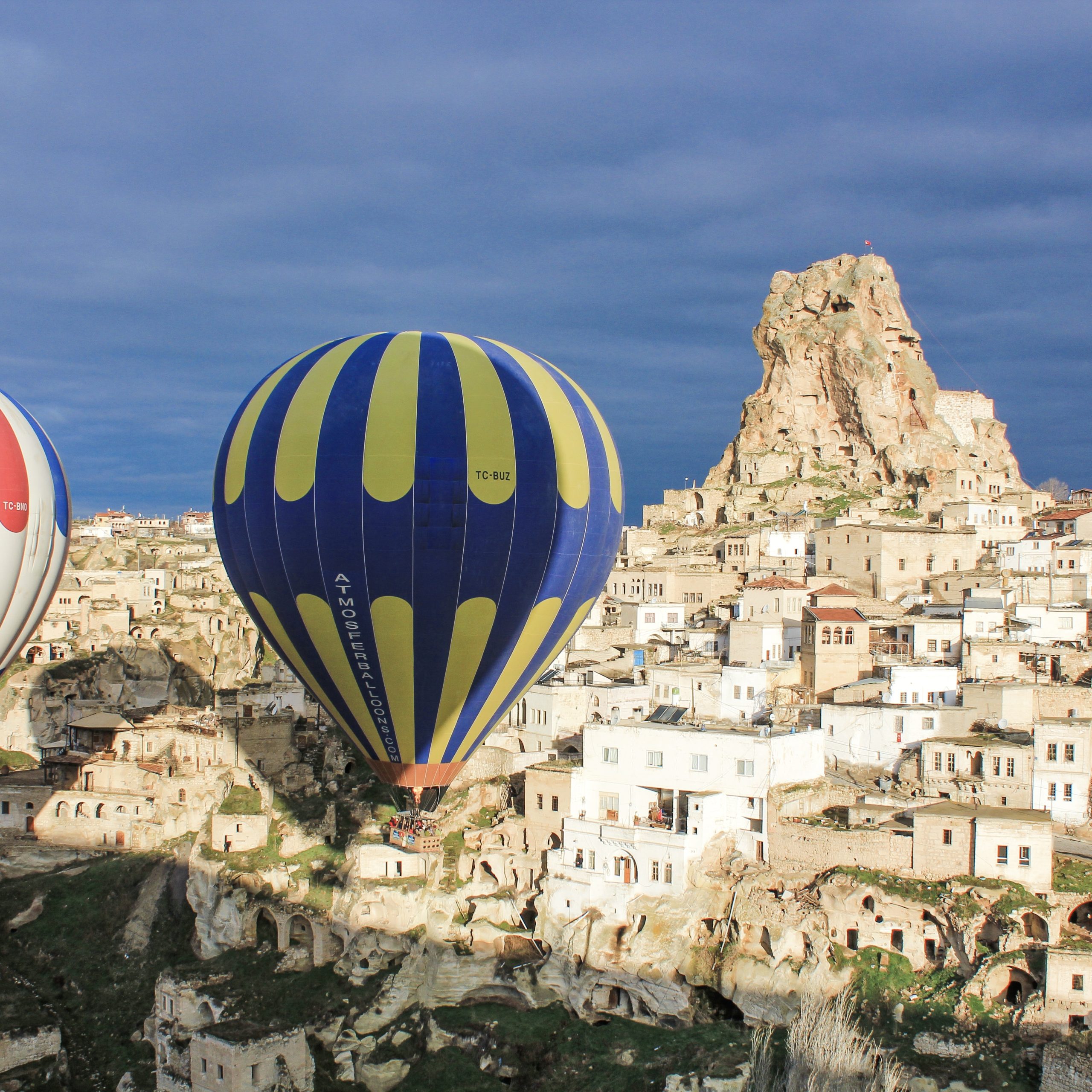

CAPPADOCIA, TÜRKIYE — There are landscapes that feel beautiful and there are landscapes that feel impossible. Cappadocia belongs firmly in the second category. Volcanic eruptions ten million years ago laid down soft tuff stone; wind and water then carved it into a sea of conical towers, ribboned valleys, and rose-coloured cliffs. Humans, never to be outdone, hollowed cities into the rock and built churches inside the chimneys.
Today, Cappadocia is one of those rare destinations where the photographs do not exaggerate. If anything, they undersell the silence at sunrise, the warmth of the stone underfoot at noon, the colour of the cliffs at six o’clock in the evening. Below is everything you need to know to plan a first trip — and why three days, in our view, is the right amount of time.
The hot air balloons at sunrise
You have seen the photograph. Hundreds of balloons, drifting just above the fairy chimneys, glowing pink in the first light. The reality is even better. Lift-off is around 5:30am; you’ll be wrapped in a blanket, holding a paper cup of Turkish tea, watching the burners light one by one across the valley floor. The flight itself lasts about an hour, drifting low over Göreme, climbing high over Pigeon Valley, and finally touching down in a field where champagne is poured for everyone aboard.
Book through a reputable operator with a strong safety record (Royal Balloon, Butterfly Balloons and Kapadokya Balloons are the names locals trust) and book early — flights are weather-dependent and the calendar fills weeks in advance, particularly between April and October. If your morning is cancelled by wind, do not panic; reputable companies refund or rebook you the next day.
The fairy chimneys and valleys
The most rewarding way to see Cappadocia is on foot. The Rose Valley and Red Valley, named for the way the cliffs blush at sunset, can be linked into a four-hour hike with rock-cut churches hidden along the way. Love Valley, just outside Göreme, is the most photographed; Pigeon Valley, between Uçhisar and Göreme, the most peaceful. Bring water, sturdy shoes and a hat, and start early.
The Göreme Open-Air Museum is the cultural centrepiece — a UNESCO World Heritage cluster of monastic cave churches, several with Byzantine frescoes still bright after a thousand years. Plan two unhurried hours, and pay the small extra fee for the Dark Church; the colour of its interior is worth every lira.
The underground cities
Cappadocia’s rock is not just carved on the surface. Below ground, entire cities stretch eight stories deep, complete with stables, kitchens, churches and ventilation shafts. Early Christians used them as refuges; some date back to the Hittite era. The two best-known are Derinkuyu and Kaymaklı. Derinkuyu is the deeper of the two and the more atmospheric — claustrophobic in the best sense — and a guided visit will bring it to life. (Skip both if tight tunnels are not for you; the surface is wonderful enough.)
Where to stay: the cave hotels
You did not come to Cappadocia to sleep in a chain hotel. The cave hotels of Göreme, Uçhisar and Ürgüp are an attraction in their own right — bedrooms hewn into the rock, terraces facing the valleys, fireplaces lit at dusk in autumn. Museum Hotel in Uçhisar and Argos in Cappadocia are at the luxury end; Sultan Cave Suites and Kelebek are perennial favourites; almost every neighbourhood has a beautifully restored boutique option.
Whichever you choose, pick a hotel with a roof terrace facing east. You’ll thank us at sunrise.
The perfect three-day itinerary
Day 1 — Göreme & the Open-Air Museum. Settle in, walk into the village for lunch, spend the afternoon at the Open-Air Museum, then up to the Sunset Point above Göreme for the evening light.
Day 2 — Balloon flight & the valleys. Pre-dawn balloon flight, late breakfast, then a walking traverse of Rose and Red Valleys. Dinner in a vaulted stone restaurant in Ürgüp.
Day 3 — Underground & Uçhisar. Morning at Derinkuyu Underground City, lunch in the orchards of Mustafapaşa, late afternoon climb to Uçhisar Castle for a final, sweeping view across the region before you go.
When to visit
April to early June and mid-September to October are ideal: balloon-friendly weather, comfortable temperatures, and wildflowers or autumn vines in the valleys. July and August are hot and busy, but balloons fly almost daily. Winter is quiet and stunning when snow dusts the chimneys, though balloon cancellations are more frequent.
How Lupin plans your Cappadocia
Our Cappadocia in Depth tour combines a sunrise balloon flight, a private valley hike with a local guide, an unrushed visit to Derinkuyu, and two nights in a hand-picked cave hotel. If you have a single bucket-list trip in you this year, make it this one.
0 Comment